Grand Avenue Field Notes
Things to do in Arco, Idaho: the honest local list
Arco is a town of roughly a thousand people sitting between a lava field, a nuclear laboratory and the Lost River Range, which is a strange combination and the reason people keep stopping here. Instead of one big attraction, Arco works as a base: a short drive takes you to any of a dozen very different outings, and the drive back is short enough that you can do two in a day. This page is the index for that. Each guide below covers one activity in the detail needed to actually plan it, including the permits, seasons and land rules that decide whether the trip is possible.
Jump to trip essentials- Region
- Butte County, Idaho
- Season
- Year-round; access varies
- Category
- Trip planning

Before you go
- Craters of the Moon’s main entrance is about 18 miles southwest; mountain trailheads and regional hot springs can take much longer, especially on unpaved roads.
- For a short visit, pair Number Hill and the USS Hawkbill sail with downtown Arco; allow a separate half-day or more for Craters.
- Land managers change by destination. Check NPS, Forest Service, BLM or Idaho Fish and Game before you commit to a trip.
- Cell coverage drops fast outside town. Save maps and directions offline; bring water and fuel before entering remote country.
- EBR-I museum access, some campgrounds, the Craters Loop Road and high roads are seasonal; verify current conditions.
Downtown Arco
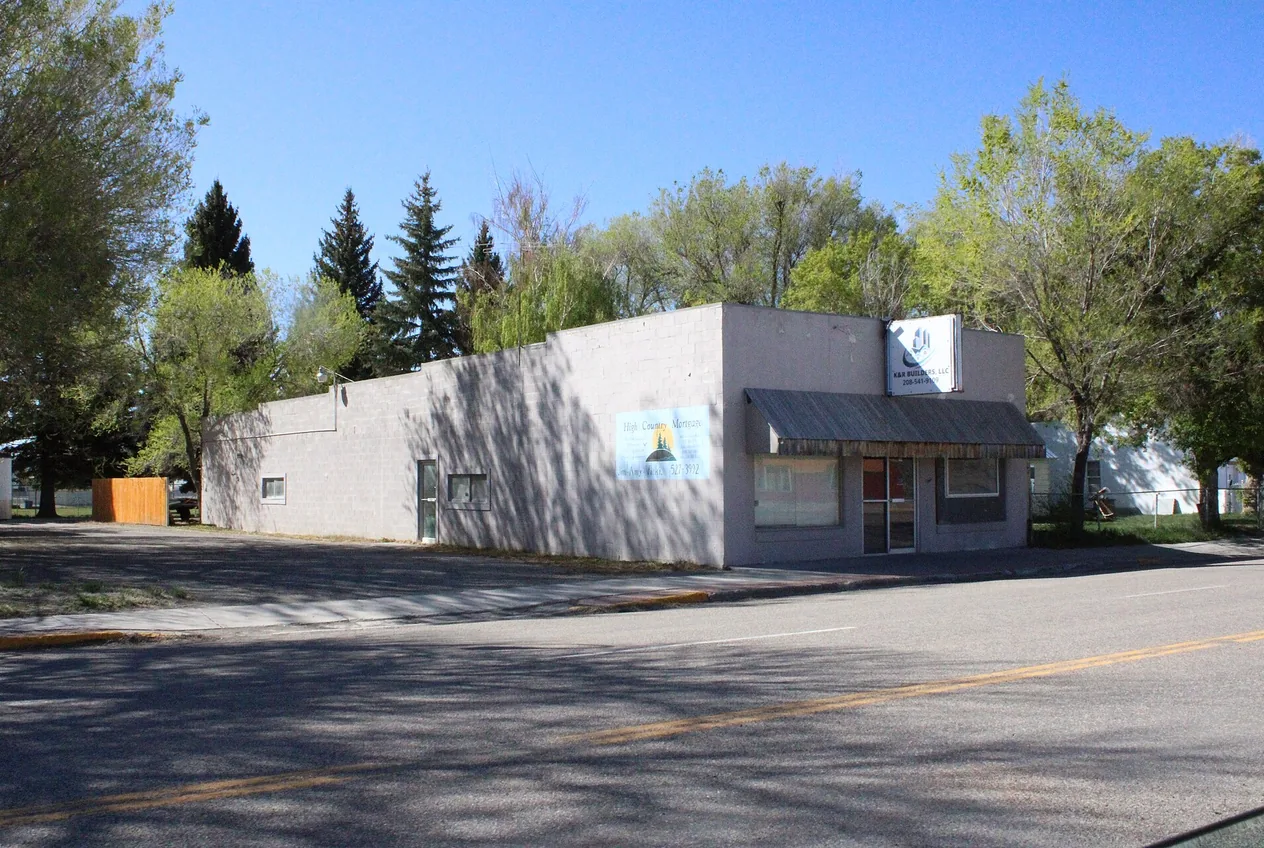
Downtown Arco, Butte County; the hub for outings in every direction.
View on OpenStreetMapArco, Idaho: the local overview
Arco is more than the place where travelers turn toward Craters of the Moon.
The small central Idaho community sits where several distinct landscapes and stories meet. Southwest of town, dark lava fields spread across the Snake River Plain. North of Arco, the Lost River Valley leads toward Mackay, Idaho's highest mountain and some of the state's most rugged backcountry. Southeast of town, preserved nuclear-research facilities tell the story of the first usable electricity produced through atomic fission.
Arco itself carries layers of local history. Painted graduation years cover Number Hill above town. The sail of the USS Hawkbill stands as an unexpected naval landmark in the Idaho desert. Downtown provides a practical place to regroup between hiking, fishing, soaking, camping and sightseeing.
Build an Arco day around a few of these, then leave a little time for the story at the bar:
- Volcanic geology
- Atomic history
- Local landmarks
- Short walks and serious mountain hikes
- Lava-tube caves
- Hot springs
- Fishing and fly fishing
- Hunting
- ATV and UTV riding
- Hang gliding, paragliding and sailplanes
- Geocaching and letterboxing
- Camping
- Stargazing
- Scenic driving
- Seasonal events
Conditions change: Museum hours, cave access, campground services, backcountry roads, trails and seasonal events may change. Check the applicable public agency or museum before leaving Arco.
Arco, Idaho at a glance
- Best-known nearby attraction: Craters of the Moon National Monument and Preserve
- Distance to Craters of the Moon: Approximately 18 miles southwest
- Best historical attraction: EBR-I Atomic Museum
- Best in-town landmark: Number Hill
- Most unusual roadside landmark: USS Hawkbill sail
- Best short mountain hike: King Mountain Natural Arch
- Best advanced mountain objective: Mount Borah
- Best local hot-spring outing: Wild Rose Hot Springs near Carey, subject to current access
- Best regional fishing waters: Big Lost River and Mackay Reservoir
- Best-known OHV destination: Mackay Mine Hill
- Best dark-sky destination: Craters of the Moon
- Best scenic route: Peaks to Craters Scenic Byway
- Best after-adventure stop: Club Sawtooth
- Typical visit: One day for Arco and Craters; two or more days for the Lost River Valley
Build your Arco trip with the Explore Map
Use the Club Sawtooth Explore Map to compare landmarks, trails, hot springs, fishing waters, campgrounds, ATV areas and historical attractions. Use the map to compare nearby stops, then open a guide and check current conditions before you go.
Explore nearby stops: Open the Explore map
1. Explore Craters of the Moon
Craters of the Moon National Monument and Preserve is the essential Arco day trip.
The main visitor entrance lies about 18 miles southwest of town on U.S. Highway 20/26/93. Begin at the Robert Limbert Visitor Center rather than following a map application toward an unpaved backcountry road.
The developed park experience centers on the seven-mile Loop Road, connecting:
- North Crater Flow
- Devils Orchard
- Inferno Cone
- Spatter Cones
- Big Craters
- Broken Top
- Tree Molds
- Wilderness Trail
- Caves Area
A one-hour stop can include the visitor center and North Crater Flow. A half-day allows Inferno Cone, Devils Orchard and Spatter Cones. A full day creates time for longer trails and permitted cave exploration.
Craters also supports camping, ranger programs, winter skiing, snowshoeing and night-sky viewing.
Before you go
- Cell service is limited.
- Loop Road access is seasonal.
- Cave availability changes.
- Cave permits are obtained in person when caves are open.
- Drinking water is not available along the Loop Road.
- Trails cross exposed terrain with little shade.
- Pets are restricted from trails and backcountry areas.
Full guide: Craters of the Moon from Arco
2. Visit EBR-I Atomic Museum
Experimental Breeder Reactor No. 1 is one of Idaho's most important science-history sites.
On December 20, 1951, EBR-I became the first power plant to produce usable electricity through nuclear fission. Its initial demonstration illuminated four 200-watt lightbulbs. The reactor-generator system produced enough electricity for the building the next day.
Visitors can see:
- The original reactor facility
- Historic control room
- Analog instruments
- Remote-handling equipment
- Radiation-detection equipment
- Reactor-development exhibits
- Aircraft nuclear-propulsion prototypes
The museum is a decommissioned National Historic Landmark, not an operating power reactor.
Do not combine the two atomic milestones
- 1951: EBR-I produced the first usable electricity through nuclear fission.
- 1955: BORAX-III generated enough electricity to supply Arco.
Arco's identity as the first town supplied by nuclear-generated electricity refers to BORAX-III in 1955, not EBR-I's four-bulb demonstration.
EBR-I normally operates during a summer visitor season. Museum access does not authorize visitors to explore the surrounding Idaho National Laboratory reservation.
Full guide: EBR-I Atomic Museum near Arco
3. Read the years on Number Hill
Number Hill is Arco's most recognizable community landmark.
Large white graduating-class years cover the hillside above town. The tradition is generally traced to the Butte County High School class of 1920, with later classes adding or maintaining their own dates.
Number Hill works well as:
- A brief local-history stop
- A photography subject
- A downtown-Arco landmark
- A companion to the area's atomic history
View the hill from a lawful public location. Do not assume visible tracks are public trails, and do not add or repaint numbers.
Full guide: Number Hill in Arco
4. See the USS Hawkbill sail
One of Arco's most unexpected landmarks is the preserved sail of the USS Hawkbill.
The submarine carried hull number 666 and became known as the "Devil Boat." The sail creates a physical connection between Arco and the U.S. Navy's nuclear-submarine history, despite standing hundreds of miles from the ocean.
Treat the location as a public landmark and memorial:
- Park legally.
- Do not climb the structure.
- Supervise children.
- Leave military commemorative elements undisturbed.
The sail is one of the town’s easiest landmarks to pair with a downtown stroll.
5. Learn why Arco became the Atomic City
Arco's atomic identity extends beyond EBR-I.
The region became a major center of postwar reactor development after the National Reactor Testing Station was established in 1949. The larger history includes:
- Experimental electricity generation
- Materials testing
- Breeder-reactor research
- Boiling-water-reactor development
- Reactor-safety experiments
- Aircraft nuclear-propulsion research
- Nuclear-fuel-cycle research
- Naval-reactor connections
Appropriate public experiences include EBR-I, the Hawkbill sail, local historical interpretation and official virtual tours. Restricted Idaho National Laboratory roads and facilities are not sightseeing destinations.
6. Hike King Mountain Natural Arch
King Mountain Natural Arch is one of the best short-hike options in the broader Arco region.
The roughly 80-foot limestone arch is reached by Forest Service Trail 4343. The trail is about half a mile each way and climbs through sagebrush, mountain mahogany and forested terrain.
Expect:
- Continuous uphill travel
- Open sun
- No drinking water
- Loose dirt and rock
- Seasonal snow or mud
- Variable access-road conditions
The trail is nonmotorized. Legal motorized routes exist elsewhere in the Arco Pass area, but ATVs and UTVs are not allowed on the Natural Arch Trail itself.
Regional hiking guide: Hiking near Arco
7. Watch gliders over King Mountain
King Mountain supports several types of soaring flight:
- Hang gliders
- Paragliders
- Sailplanes
The Forest Service mountain launch is an advanced H4/P4 site. Strong thermals, turbulence and rapidly changing winds make it appropriate for experienced pilots rather than first-time visitors.
The mountain launch, private gliderport and Natural Arch Trail are separate destinations. Confirm which one you intend to visit and check its current access before setting out.
Visitors should stay clear of launch paths, landing areas, wings, lines and runways. Flying is weather-dependent and never guaranteed.
Full guide: King Mountain gliding near Arco
8. Soak at Wild Rose Hot Springs near Carey
Wild Rose Hot Springs lies west of Craters of the Moon along the route toward Carey.
The primitive spring is also known as:
- Milford Sweat
- Milford Hot Springs
- Carey Hot Springs
Wild Rose is not a developed resort or public swimming complex. Visitors have historically used the spring without a formal check-in, but access can change. Respect current signs and leave no trace.
Expect:
- Primitive pools
- Uneven ground
- No restroom
- No changing room
- No potable water
- Variable water temperature
- Uncertain parking and cell coverage
Check current access, obey every sign and owner request, pack out everything and keep soap and glass out of the pools.
Local guide: Wild Rose Hot Springs near Carey
Statewide guide: Best hot springs in Idaho
Outdoor activities near Arco
9. Hike lava fields and mountain valleys
Hiking near Arco ranges from quarter-mile volcanic walks to Idaho's highest summit.
Easy and short
- North Crater Flow
- Devils Orchard
- Spatter Cones
- Earthquake Interpretive Site
- Number Hill viewing from town
Short but demanding
- Inferno Cone
- King Mountain Natural Arch
- Big Craters
Moderate
- Broken Top
- Tree Molds
- North Crater Trail
- Copper Basin trailheads
- Wildhorse Canyon routes
Advanced
- Craters Wilderness Trail
- Leatherman Pass
- Remote Lost River Range routes
- Mount Borah
Mount Borah reaches 12,662 feet and gains more than 5,000 feet on its standard route. Chicken Out Ridge introduces exposed scrambling and serious fall consequences. It is a mountain objective, not a casual add-on.
Full hiking guide: Hiking near Arco
Mount Borah guide: Climbing Mount Borah
10. Fish the Big Lost River
The Big Lost River system is the primary fishing resource in the Arco and Mackay region.
Depending on the reach, anglers may find:
- Rainbow trout
- Cutthroat trout
- Brook trout
- Mountain whitefish
- Reservoir kokanee
- Smaller mountain-stream opportunities
The river changes considerably between Copper Basin, Mackay, Mackay Reservoir and the lower reaches toward Arco. The lower Big Lost can be intermittently dewatered, and public access varies where the river crosses private and public land.
Fly-fishing approaches can include dry flies, dry-dropper rigs, nymphing, small streamers and terrestrials.
Full guide: Fishing and fly fishing near Arco
11. Fish, boat or camp at Mackay Reservoir
Mackay Reservoir is one of the best developed recreation destinations in the Lost River Valley.
Visitors can fish, boat, paddle, camp, watch wildlife and stargaze beneath the Lost River Range.
The Joe T. Fallini Recreation Site provides developed camping, including RV hookups, water, electrical service at designated sites, restrooms, a dump station, boat access and an interpretive trail. Verify current fees and seasonal services before travel.
Fishing guide: Fishing near Arco and Mackay
Camping guide: Camping near Arco and the Lost River Valley
12. Hunt the Lost River country
The broader region includes parts of Idaho game-management Units 49, 50 and 51.
Depending on the unit, tag and year, opportunities may include:
- Mule deer
- Elk
- Pronghorn
- Controlled moose, bighorn sheep and mountain goat hunts
- Black bear
- Mountain lion
- Gray wolf
- Sage-grouse
- Forest grouse
- Chukar and gray partridge
- Rabbits and hares
- Migratory birds
A unit boundary does not establish public access. Current tags, dates, weapons, sex restrictions, private property and motorized rules must be checked in the Idaho Hunt Planner.
Full guide: Hunting near Arco
13. Ride ATV and UTV routes
The broader Lost River region contains designated motorized roads and trails around:
- Mackay Mine Hill
- Arco Pass
- Copper Basin
- Wildhorse Canyon
- Antelope Canyon
- Little Lost River Valley
- Pass Creek
- Craters backcountry, where officially designated
The Forest Service Motor Vehicle Use Map and BLM travel map control legal access. A trail app or visible tire track is not legal authorization.
Mackay Mine Hill is especially notable because its official map separates rough gravel, high-clearance and ATV-only routes. The Shay Trestle route is restricted to machines less than 50 inches wide.
ATV guide: ATV and UTV trails near Arco
Mine Hill guide: Mackay Mine Hill Tour
14. Go geocaching or letterboxing
Arco's town landmarks, lava landscapes and high-desert roads create opportunities for:
- Traditional geocaches
- Multi-caches
- Mystery caches
- EarthCaches
- Virtual caches
- Wherigo experiences
- Letterbox hybrids
- Cache series
Craters of the Moon contains approved EarthCache and virtual experiences focused on volcanic geology. Traditional letterboxing uses clues and rubber stamps, while letterbox hybrids combine geocaching and stamping.
Check each live listing, respect private property, stay on legal roads and trails, and do not reveal puzzles, final coordinates or EarthCache answers.
Full guide: Geocaching and letterboxing near Arco
15. Go rockhounding across Butte and Custer counties
Arco works as a base for exploring varied geology around the Arco Hills, Horsethief Canyon, Big Lost River corridor, Antelope Creek, Mackay and Challis.
Potential regional finds include:
- Chalcedony
- Banded agate
- Jasper
- Quartz
- Geodes and nodules
- Common invertebrate fossils
- Fluorite
- Garnet
- Malachite and azurite
- Chalcopyrite and pyrite
- Other mining-district minerals
Verify surface ownership, mineral ownership and active mining claims before collecting. Collecting rocks or volcanic specimens inside Craters of the Moon is prohibited.
Full guide: Rockhounding near Arco
Night skies, camping and seasonal recreation
16. Stargaze at Craters of the Moon
Craters of the Moon is an International Dark Sky Park and one of the strongest night-sky destinations in the region.
The best conditions generally occur:
- Near the new moon
- Before moonrise
- On clear, smoke-free nights
- After astronomical twilight
- When wind is manageable
Popular developed viewing areas include Devils Orchard, the Inferno Cone parking area and Spatter Cones. Remain on developed surfaces rather than hiking jagged lava trails after dark.
Club Sawtooth can be the Arco meetup and sealed beer or wine to-go stop, subject to lawful transport and current park rules. Return with the sober driver, park and make the main drinking, darts and pool happen afterward.
Full guide: Stargazing near Arco
17. Camp near Arco
Camping options range from in-town RV hookups to no-hookup lava camping and remote Forest Service sites.
Potential bases include:
- Honeys Park
- Craters of the Moon RV Park
- Mountain View RV Park
- Lava Flow Campground
- Mackay Reservoir and Joe T. Fallini Recreation Site
- Mount Borah Trailhead
- Iron Bog
- Broad Canyon
- Star Hope
- Wildhorse
- Lake Creek
- Copper Basin
Compare hookups, water, restrooms, dump stations, road type, RV length and seasonal access before choosing a site.
Full guide: Camping and RV parks near Arco
18. Experience winter around Arco
Winter turns the region into a different destination.
Depending on conditions, visitors can:
- Snowshoe at Craters of the Moon
- Cross-country ski the closed Loop Road
- Photograph snow and lava
- Track winter wildlife
- Ice fish at Mackay Reservoir
- Snowmobile designated Lost River routes
- Winter camp with the required permits
- Stargaze under long winter nights
- Play Remote Play darts inside Club Sawtooth when the weather kills the outdoor plan
Check grooming, snow depth, ice conditions, avalanche information and Idaho 511 before leaving town.
Full guide: Winter activities near Arco
Scenic drives and geology
19. Drive the Peaks to Craters Scenic Byway
The Peaks to Craters Scenic Byway connects Carey, Craters of the Moon, Arco, Mackay, Mount Borah country and Challis.
The route is about 143 miles. A nonstop drive takes roughly two and a half hours, but the route deserves two or three days once Craters, Arco, the reservoir, mining history, trails and the earthquake site are included.
Full guide: Peaks to Craters Scenic Byway
20. See the 1983 Borah Peak earthquake fault scarp
North of Mackay, the Earthquake Interpretive Site explains the magnitude 6.9 Borah Peak earthquake of October 28, 1983.
The event ruptured the Lost River fault and left a visible step across the landscape. The free seasonal day-use site includes interpretive signs, picnic tables, one vault toilet and no potable water.
The site works well with Mackay Reservoir, Mount Borah, Mackay Mine Hill and the scenic byway.
Full guide: 1983 Borah Peak earthquake and fault scarp
21. Explore Mackay Mine Hill
Mackay Mine Hill crosses the historic White Knob Mining District above Mackay.
Visitors can experience portions of the district through scenic driving, ATV and UTV routes, mountain biking, hiking, horse travel and interpretive stops. Historical remains include former townsites, tramway structures, rail grades, mine works, cabins, smelter sites and ore-handling infrastructure.
Active mining and temporary closures can affect access, and mine openings should never be entered.
Full guide: Mackay Mine Hill Tour
Downtown Arco and seasonal events
22. Take a short walk through town
Downtown Arco works best as a connecting experience rather than a manufactured attraction district.
Combine:
- Number Hill views
- USS Hawkbill sail
- Public historical displays
- Parks
- Photography
- Geocaching
- Club Sawtooth
Use sidewalks where available, cross highways lawfully and respect residential property.
23. Experience Atomic Days
Atomic Days is Arco's signature annual celebration, traditionally held during the third full weekend in July.
The event commemorates July 17, 1955, when BORAX-III supplied electricity to Arco.
Programming changes annually but commonly includes:
- Atomic Days parade
- Wet parade and community water fight
- Fire crews spraying water along the parade route
- Atomic Days Rodeo
- Mutton bustin'
- Dirt-bike barrel racing
- Miniature bull riding
- Food and craft vendors
- Park activities
- Bands and live music
- Late-night events at Club Sawtooth
The wet parade
The procession begins with a dry portion. Sirens and banners signal the wet portion, when firefighters spray water and the route becomes a community water fight.
Visitors in the wet zone should bring:
- Clothes and shoes that can get soaked
- Towels
- Dry clothes
- Waterproof phone protection
- Drinking water
- Sun protection
Wait for the official signal and follow event directions.
Atomic Days Rodeo
The rodeo is a major part of the weekend. Exact performances, competition types, tickets and start times change each year.
Atomic Days at Club Sawtooth
Club Sawtooth can host bands, music, dancing, darts, pool and late-night Atomic Days events after the parade, park activities and rodeo.
The lineup changes each year, so check Club Sawtooth’s current event listings before making plans.
Check Club Sawtooth’s current event listings for the Atomic Days lineup.
24. Check local event calendars
Other public events may include:
- Butte County Fair activities
- Parks and recreation programs
- Christmas Light Parade
- Craters astronomy programs
- Star parties
- EBR-I special tours
- Arco Idaho Science Center activities
- Community races and walks
- Holiday programs
Check current event calendars from the City of Arco, Butte County, Arco Parks and Recreation, Craters of the Moon and Idaho National Laboratory before traveling.
Suggested Arco itineraries
One hour in Arco
- View Number Hill.
- Visit the USS Hawkbill sail.
- Walk through downtown.
- Continue the road trip or return later to Club Sawtooth.
Half day in Arco
- Visit Number Hill.
- Stop at the Hawkbill sail.
- Explore downtown.
- Visit EBR-I when open and time permits.
- Return to Arco.
Half day at Craters
- Start at the visitor center.
- Walk North Crater Flow.
- Visit Devils Orchard.
- Climb Inferno Cone if conditions allow.
- Visit Spatter Cones.
- Return to Arco.
Full Arco and Craters day
- View Number Hill and the Hawkbill sail.
- Drive to Craters.
- Complete two or three Loop Road trails.
- Explore open caves with a permit if time allows.
- Return to Arco.
- Park for the evening.
- Stop at Club Sawtooth.
Atomic-history day
- Explore Arco's public atomic-history sites.
- Visit the Hawkbill sail.
- Tour EBR-I during current hours.
- Return to Arco.
- View Number Hill.
- Finish downtown.
Atomic Days weekend
Friday
- Visit EBR-I.
- Explore Arco landmarks.
- Attend early festival activities.
- Go to the rodeo.
- Continue to Club Sawtooth after the rodeo.
Saturday
- Attend park activities.
- Watch the dry parade.
- Prepare for the wet parade.
- Change into dry clothes.
- Attend the evening rodeo.
- Check Club Sawtooth for the night's band or late event.
Sunday
- Start later if the prior night ran late.
- Visit Craters of the Moon.
- Keep the trail plan reasonable.
Two-day itinerary
Day one
- Downtown Arco
- Number Hill
- Hawkbill sail
- EBR-I
- Club Sawtooth after driving
Day two
- Craters of the Moon
- Hiking or caves
- Sunset or stargazing if the return plan is solid
- Camping or return to Arco
When is the best time to visit?
Spring
Best for cooler hiking, wildflowers, lower-elevation sightseeing and smaller crowds. Watch for mud, snow, closed roads and limited campground services.
Summer
Best for full Loop Road access, EBR-I, camping, mountain trails, fishing, ATV riding, Atomic Days and stargazing. Watch for heat, wildfire, smoke and thunderstorms.
Fall
Best for cool hiking, fishing, photography, hunting and stargazing. Watch for shorter daylight, active hunting seasons, early snow and seasonal closures.
Winter
Best for snowshoeing, cross-country skiing, ice fishing, winter photography, long nights and Club Sawtooth's indoor darts scene. Watch for road closures, severe cold and limited services.
Club Sawtooth: before the adventure and after the story changes
Club Sawtooth is the social anchor for the Explore Arco collection.
Before an ordinary road trip or low-risk outing, use the Club to:
- Meet the group
- Compare maps
- Check conditions
- Decide who is driving
- Pick up sealed beer or wine to go where lawful
- See what is happening later
After the activity, come back for:
- Four electronic dartboards with Remote Play
- Compatible dart tournaments
- Pool tables
- Foosball
- AMI jukebox
- Mortal Kombat 4
- Karaoke when available
- Occasional live music and events
- Drinks and the unofficial retelling of the day
Club Sawtooth is dog friendly inside and cigarette smoking is allowed inside. Smoke-sensitive visitors should know that before entering.
Overnight vehicle parking is allowed with current staff direction. That does not include RV hookups or campground services.
Club Sawtooth 156 W Grand Ave Arco, Idaho (208) 527-3003 Daily, 2 p.m.–2 a.m.
Frequently asked questions
What is Arco, Idaho known for?
Arco is known for its atomic-energy history, proximity to Craters of the Moon, Number Hill and its location at the entrance to the Lost River Valley.
Is Arco worth visiting?
Yes. Arco works especially well for travelers interested in volcanic geology, science history, scenic drives, hiking, fishing, hot springs, camping, stargazing and Lost River Valley recreation.
How far is Craters of the Moon from Arco?
The main entrance is approximately 18 miles southwest of Arco.
How much time should I spend in Arco?
Allow half a day for the primary town landmarks, one full day when combining Arco with Craters and two or more days for EBR-I, Mackay, Mount Borah, fishing or ATV riding.
What can you do in downtown Arco?
View Number Hill, see the USS Hawkbill sail, explore public historical displays, search for geocaches and visit Club Sawtooth.
Why are numbers painted on the hill?
The numbers represent local graduating-class years. The tradition is generally traced to 1920.
Why is there a submarine sail in Arco?
The USS Hawkbill sail reflects Arco's connection to nuclear research and U.S. Navy history.
What happened at EBR-I?
EBR-I produced the first usable electricity from nuclear fission in December 1951.
Did EBR-I power Arco?
No. BORAX-III supplied electricity to Arco in 1955.
Is EBR-I open all year?
No. It normally operates seasonally.
What are the best hikes near Arco?
Strong options include North Crater Flow, Devils Orchard, Inferno Cone, King Mountain Natural Arch, Broken Top and Copper Basin routes. Mount Borah is an advanced climb.
Can you visit hot springs near Arco?
Wild Rose near Carey is the primary primitive spring covered by this site. Visitors have historically used it without a formal check-in, but access may change. Respect current signs and landowner requests.
Can you fish near Arco?
Yes. The Big Lost River and Mackay Reservoir are the primary regional fisheries.
Are there ATV trails near Arco?
Yes. Major areas include Mackay Mine Hill, Arco Pass, Copper Basin, Wildhorse Canyon and Antelope Canyon.
Can you stargaze near Arco?
Yes. Craters of the Moon is an International Dark Sky Park.
Can you camp near Arco?
Yes. Options include in-town RV parks, Lava Flow Campground, Mackay Reservoir, Mount Borah Trailhead and several Lost River Forest Service campgrounds.
What happens during Atomic Days?
Atomic Days commonly includes a parade, wet parade with firefighters spraying water, rodeo events, park activities, vendors, live music and late-night events at Club Sawtooth. Exact dates and programming change annually.
Is Club Sawtooth dog friendly?
Yes. Dogs are welcome inside. Owners remain responsible for keeping them clear of dart lanes, exits and conflicts.
Is smoking allowed inside Club Sawtooth?
Yes. Cigarette smoking is allowed inside.
What is the main activity at Club Sawtooth?
Remote Play darts. Club Sawtooth has four electronic dartboards that support local matches, remote opponents and compatible tournaments.
Frequently asked questions
How much time do I need for Arco and Craters of the Moon?
Allow a short stop to view Number Hill and the USS Hawkbill sail from public places, a half-day for several developed trails at Craters, or a full day to combine town and the monument. Add another day for seasonal EBR-I or the Lost River Valley rather than treating them as quick detours.
Did the EBR-I reactor power Arco?
No. EBR-I first produced usable electricity from nuclear fission in 1951; BORAX-III supplied Arco with nuclear-generated electricity in 1955. EBR-I museum visits are seasonal, and the surrounding laboratory reservation is not open for sightseeing.
Can I visit a hot spring near Arco?
Wild Rose near Carey is the regional primitive spring featured here, but visitors have historically been tolerated, not granted permanent public access. Check current access before entering; if signs, gates or the property owner prohibit entry, skip the stop. See the dedicated Wild Rose guide for safety and parking considerations.
Sources and updates
Check current access, hours and conditions before setting out.