Grand Avenue Field Notes
Atomic Days in Arco, Idaho: the festival, the wet parade and the rodeo
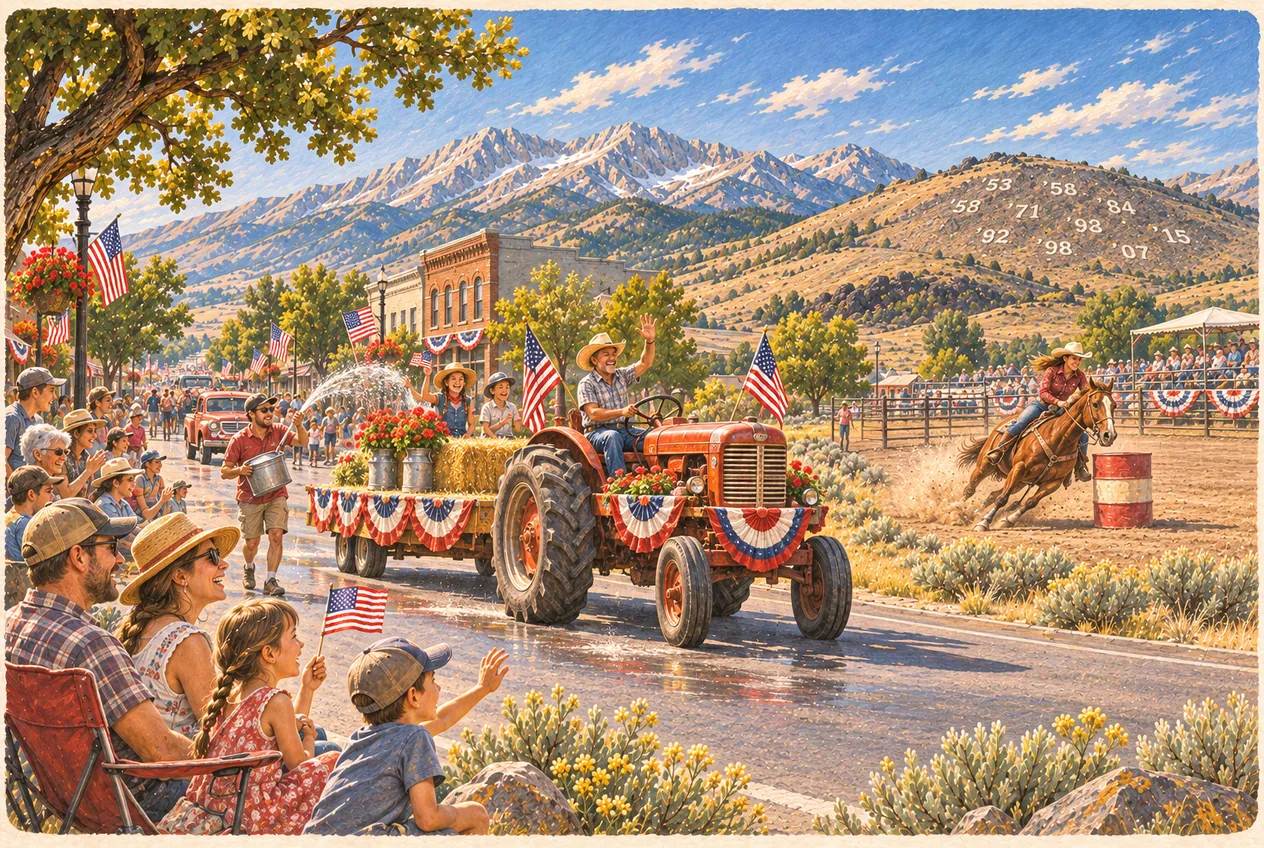
Arco is a small town in the high desert with a strange claim to fame, and once a year it throws a party about it. Atomic Days is the community’s own celebration of July 17, 1955, the day electricity generated by the experimental BORAX-III reactor was supplied to Arco, which is why the town is widely recognised as the first community powered by nuclear-generated electricity. The weekend is not a re-enactment and not a museum programme. It is a parade, a rodeo, a town-wide water fight, tournaments on the ball fields, food and craft vendors, family reunions, class reunions, live music and fireworks when the year’s budget includes them. It began in the early 1980s as a community celebration of Arco’s unusual place in nuclear-energy history, and it has kept that shape: the people who run it live here. The single detail that surprises visitors most is the wet parade. The procession starts out conventional, and then a siren goes off and fire crews begin spraying water down the route, and for a stretch of Grand Avenue the whole thing becomes a water fight on purpose. This page explains how the weekend is laid out, what to bring, how to stay dry if you would rather, where the rodeo sits, what changes from year to year and how to plan the other Arco attractions around it without spending the whole weekend in traffic.
Jump to trip essentials- Region
- Arco, Idaho: downtown festivities, Bottolfsen Park and the Butte County Rodeo Grounds
- Season
- Traditionally the third full weekend in July; the schedule, performers and fireworks are set fresh each year
- Category
- Events
Before you go
- Atomic Days is traditionally held over the third full weekend in July. Treat that as the pattern, not a promise: the City of Arco and the Atomic Days organisers publish the current schedule, and the exact dates change annually.
- The parade starts dry and turns wet on a siren signal. Bring clothing and footwear that can get soaked, a dry change in the car and waterproof protection for phones and keys, or ask organisers which viewing areas sit outside the wet zone.
- The Atomic Days Rodeo runs at the Butte County Rodeo Grounds. Performance dates and start times are set for that year alone, so confirm them before you travel rather than relying on a past weekend’s times.
- Book camping and lodging early. Arco and the surrounding valley fill up for the weekend, and the free and low-cost public sites around town are gone well before July.
- Expect parade street closures, alternate routes, limited parking, heavy foot traffic, wet pavement and livestock trailers. Fill the fuel tank before closures take effect and do not rely on cell service in the crowds.
- Choose the driver before the first drink. The parade, the rodeo and the park events all involve walking and parking, and the evening runs late.
Town-wide event, pinned to downtown Arco
Downtown Arco on the West Grand Avenue civic block, parade activities on the route announced for the current year, festivities around Bottolfsen Park and the rodeo at the Butte County Rodeo Grounds. Check current event locations before travelling.
View on OpenStreetMapWhat the weekend is, and what it commemorates
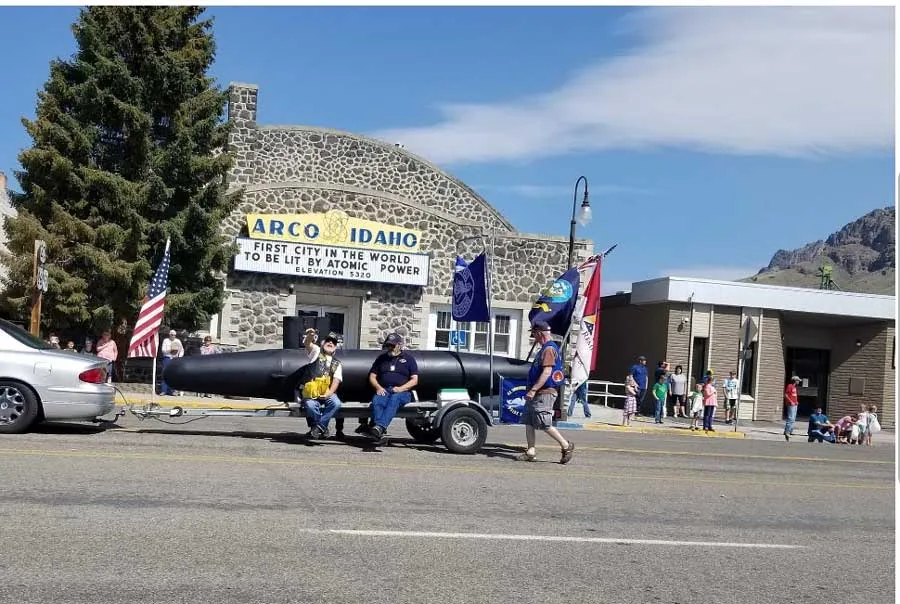
The date that matters is July 17, 1955. On that day, electricity generated by the experimental BORAX-III reactor was supplied to Arco, and the community has been widely recognised ever since as the first town powered by nuclear-generated electricity. That is a different event from the 1951 demonstration at the nearby Experimental Breeder Reactor-I, where a light bulb bank was first lit from nuclear generation, and the two are worth keeping straight before you get here: EBR-I is the reactor and the museum, the 1955 BORAX-III run is the town powering, and Atomic Days is the party about the second one.
The celebration itself began in the early 1980s as a community celebration of that unusual place in nuclear-energy history. Contemporary descriptions of the event put it on the third weekend of July and describe it as a combination of parade, rodeo, food, family gatherings, vendors, musicians, games and community events. Nothing about it is ticketed corporate sponsorship on a large scale, which is exactly why the schedule flexes: the people building the floats, running the concessions and staffing the volunteer booths are residents.
The City of Arco treats the weekend as a significant summer date in its own right. The city’s 2026 volunteer notice, for example, specifically identified Atomic Days as one of the occasions requiring additional volunteers at the Arco Idaho Science Center, which tells you where the town’s own institutions sit in the weekend: not as spectators, as staff.
The honest planning note: dates, times, performers, fireworks and which events run at all are announced annually and can change. A guide can tell you the shape of the weekend, which is stable, and it can tell you what a recent year looked like, which is useful but not authority. Before you book anything, get the current schedule from the City of Arco, Butte County, the Atomic Days organisers and this bar.

The wet parade, and the moment it stops being dry
The Atomic Days parade is the part visitors remember, and it is not what the word parade suggests. It begins as a conventional procession: floats, vehicles, community groups, the usual roadside standing about. Partway through, sirens and banners signal the start of the wet parade, and water becomes part of the event. Fire crews spray water along the route. Spectators and parade participants join in, and for a stretch the thing is a community water fight.
The transition is deliberate and it is signalled, which is the detail that makes the difference between enjoying it and spending the rest of the afternoon in wet clothes feeling ambushed. Before the siren, the parade stays dry. After the signal, anyone standing in the designated wet portion of the route should expect to get soaked, and not partially. Local event reporting describes exactly this sequence: a dry opening section, then sirens and banners announcing the wet portion, followed by a great deal of water. Regional festival listings describe the same thing at the town scale, a parade that changes on a siren cue into a town-wide water fight.
That means the parade is worth attending on its own terms rather than as a curiosity to photograph from a safe distance. Decide in advance which kind of participant you want to be. Standing in the wet zone with shoes that can dry and a phone in a sealed pouch is a genuinely good time, and it is what the weekend is designed around. Standing at the edge of it, dry and indignant, is also a legitimate choice, as long as you made it knowingly.
If you would rather stay dry, do not solve it by guessing. Ask the organisers which viewing areas are outside the wet zone, and be aware that distance from a float is not a reliable defence. Water is being applied along the route rather than thrown from a single spot, so the boundary is set by where the crews work and not by how far you think you are standing from the nearest participant.
What to bring to the parade, and what to leave in the hotel room
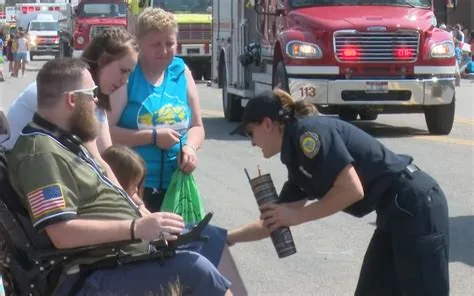
Prepare for water rather than treating this as an ordinary roadside procession. The practical list is short and boring, and the people who ignore it are the ones who leave early.
- Clothing that can get wet and dry the same day, including a hat with a brim.
- Water-resistant footwear, or shoes you do not mind ruining. Pavement gets wet and then slippery.
- A full dry change of clothes in the vehicle, not in a bag you are carrying through the crowd.
- A towel.
- A waterproof phone pouch, worn rather than held.
- A sealed bag for keys, cards and cash.
- Sun protection: the July high desert is exposed and the parade is outdoors for hours.
- Drinking water, more than you think you need.
- Eye protection for young children if they need it, and a dry change for them as well.
What not to bring is just as useful, because the failure mode here is a ruined expensive object in a crowd that cannot stop spraying.
- Cameras that are not protected. A wet zone is not a place for an open camera body.
- Open handbags and totes, which fill with water.
- Paper items that cannot get wet, including paper maps and printed tickets you have not photographed.
- Glass containers, which are a hazard on pavement that is already slick.
- Expensive electronics without waterproof protection.
- Anything that becomes dangerous once water reaches the ground it is standing on.
One more thing people forget: the weekend is bigger than the parade. A dry layer, a warm layer for the evening and proper footwear for the rodeo grounds are separate requirements from the water fight, and the two sets of gear are not interchangeable.
Wet-parade etiquette, and keeping the event a good one
This is a community water fight, not a free-for-all, and the boundaries are the reason it has kept running for decades. The rules are not posted to be pedantic; they are what keep fire crews, infants, musicians and animals out of the spray.
- Wait for the official signal before spraying water. Before the siren, the parade is a parade.
- Keep water inside the designated wet portion of the event.
- Do not direct high-pressure water at faces, infants, older spectators, cameras, musicians, animals or emergency personnel.
- Do not add soap, dye, ice or any other substance to the water.
- Keep sidewalks and access points clear so crews and emergency vehicles can move.
- Expect pavement to become slippery and watch where you are walking.
- Supervise children near the roadway, where vehicles and floats are still moving.
- Follow directions from firefighters, law enforcement, parade organisers and volunteers without argument.
- Keep vehicles away from closed parade streets, including for a quick drop-off.
The one worth repeating is the substance rule. Adding soap, dye, ice or chemicals to the water is how a community event gets shut down and how someone gets hurt on slick pavement, and it is the fastest way to be asked to leave.
None of this means keep your distance and do nothing. Once the signal goes, participating is welcome, and the residents who have done this for years are the ones spraying the hardest. Just spray at the crowd and the pavement, not at faces, and treat the crews with more consideration than that.
The Atomic Days Rodeo at the Butte County Rodeo Grounds
The rodeo is a major part of the weekend in its own right, not a side event, and it is held at the Butte County Rodeo Grounds. Butte County maintains the grounds and publishes official county fair and rodeo participation materials, so the county is the authority on the facility and its rules while the Atomic Days organisers and the city set the festival schedule around it.
The exact programme changes year to year, but recent schedules have included mutton bustin’, children’s dirt-bike barrel racing, rodeo events, miniature bull riding, adult dirt-bike barrel racing, rodeo royalty, food and merchandise vendors and post-rodeo activities. That mix is what makes it a family event rather than a serious contest: small kids on sheep, teenagers on small bikes, actual rodeo events, and a crowd that is mostly local.
For 2026, the published schedule listed rodeo performances on July 17 and 18, with a pre-show at 6 p.m., the rodeo at 7 p.m. and a post-show around 10 p.m. Those are annual event details, not permanent hours, and they are here only so you know the shape of an evening: arrive before the pre-show, watch roughly three hours of programme, and then find the crowd moving toward town. Confirm the current year’s dates and start times before you travel, and confirm them again the week you come.
Arrive early enough to park legally. Parking at a rodeo ground with livestock trailers, contestant vehicles and equipment access does not forgive an optimistic guess, and blocking a livestock lane, a contestant gate, an ambulance lane or an equipment access point will get a vehicle moved, possibly by someone with a tow bar and no patience for tourists.
Rodeo planning, and why the water fight and the arena need different clothes
The rodeo and the wet parade are separate experiences with separate logistics, and packing for one does not cover the other. Clothing appropriate for the water fight will be miserable for a cooler evening at the grounds, so bring dry layers even if you arrived at town soaked and happy.
- Confirm the current performance dates and start time before you set out.
- Arrive early enough to park legally and walk in without cutting through staging areas.
- Do not block livestock, contestant, ambulance or equipment access, ever, including briefly.
- Bring hearing protection for children with sensitive hearing.
- Expect dust, and expect evening temperatures to fall once the sun drops behind the range.
- Keep children outside the livestock and staging areas, including the ones who insist they are careful.
- Follow the arena rules as posted, not as remembered from a different rodeo.
- Do not enter chutes, pens or competition areas for any reason, including a photo.
- Arrange the sober driver before the evening begins, not at the end of it.
The practical rhythm of a Saturday is worth planning explicitly, because the same people are involved in both: the wet parade and the park activities take the daytime, and the rodeo takes the evening. That is a long day outdoors in July, in dry air, at elevation, with a change of clothes in the middle of it. Carry water through both. Eat a real meal before the evening session rather than relying on concession stands at 9 p.m.
If you are arriving with a trailer, an RV or livestock, deal with the grounds’ requirements and the current schedule well before the weekend, not on arrival. Parade closures and heavy foot traffic in town make the last mile of a trip like that much slower than the map suggests.
The rest of the weekend: Bottolfsen Park, music, games and community events
Atomic Days extends well beyond the parade and the rodeo, and the daytime programme is where the town actually shows up. Recent celebrations have included live music, a community lunch, food and craft vendors, a horseshoe tournament, a volleyball tournament, a cornhole tournament, a fun run, family gatherings, class reunions, historical activities and events in Bottolfsen Park.
A 2025 programme gives the shape of it: Friday brought music and games, and Saturday ran the fun run, volleyball, the wet parade, lunch, music and a benefit concert, all of it centred on Bottolfsen Park. Fireworks appear in some years’ schedules and not in others, and the performers, the nonprofit partners the benefit events support, the specific games and the park schedule all change annually. Use a recent year to understand how the days are stacked, never as the current line-up.
The reason this matters for planning is that the park events are the low-stakes part of the weekend and the easiest to miss by over-scheduling. A visitor who spends Saturday morning driving to Craters of the Moon will come back to find the parade already finished. If you have flown a long way to see the wet parade, that day belongs to the parade: the park events and the rodeo are the same weekend and the lava fields are a Sunday.
The community-lunch, class-reunion and family-gathering parts are not theatre put on for visitors. Arco’s population is small, and a good share of the people at the park have grown up here or come back for this weekend. That is part of what makes the event pleasant and part of why nothing is over-produced. Join the games, buy from the vendors, let the volunteers get on with their jobs and you will be treated as a guest rather than a customer.
Getting around town while the parade and rodeo are on
Atomic Days brings more pedestrians, closed streets, trailers, livestock traffic and vehicles into Arco than a normal weekend, and the town’s streets are built for a normal weekend. The consequence is that driving in Arco during the festival is a planning problem rather than a formality.
Expect parade-related road closures and published alternate routes, limited parking, heavy foot traffic, wet pavement in the parade area, rodeo trailers and livestock movement, larger crowds, campsites and lodging booked out, late-night noise near the event areas and schedules that change during the weekend. Butte County planning records show officials coordinating alternate routes around parade closures, which is the polite way of saying that the route your navigation app suggests at 10 a.m. on Saturday may not exist for an hour.
The practical responses are unglamorous and they work. Fill the fuel tank before closures take effect, because a queue at a pump during a closure is a bad afternoon. Carry cash as well as a card, since a single payment terminal failing at a packed vendor booth has no backup. Establish a meeting point for your group in advance, because a crowd of this size in a town this small will separate anyone who planned to “meet at the parade”. Do not depend on cellular service during the larger gatherings. Park once in the morning and walk, and identify how you are getting back before the evening starts.
Check Idaho 511 for the state highways before you arrive and again on the morning of the parade. The US-20/26/93 corridor through town and US-93 north toward Mackay are the roads that matter for an Arco stay, and a closure on one of them changes a Craters of the Moon or Mackay day more than it changes anything downtown.
Before you come: the checklist that actually decides the weekend
Most of the friction at Atomic Days is created before anyone reaches town, by plans that assumed an ordinary small-town July.
- Check the current parade route and time for this year, not last year’s.
- Review the published street-closure notices.
- Confirm the rodeo dates and start time.
- Check this bar’s event schedule for the weekend, since the late-night programme is set annually.
- Reserve camping or lodging early, and have a fallback town picked out.
- Fill the fuel tank before closures begin.
- Carry cash plus another payment method.
- Waterproof the valuables, in a pouch worn and not in a pocket.
- Set a meeting point for the group and make sure everyone knows it.
- Do not depend on cell service during the big gatherings.
- Decide the sober return plan before the first drink.
On lodging: the town has full-service RV parks and campgrounds and a small number of rooms, and the free and low-cost public sites in and near Arco go first. The campgrounds inside and near Craters of the Moon fill at the same time, and the valley between them has limited alternatives. If a July weekend is already booked, look at Mackay, Carey, Ellsworth, Moore and Island Park rather than hoping for a cancellation, and book whatever you find before making other plans.
On the schedule itself: keep one part of the weekend deliberately empty. A weekend built at eight hours per day with no slack fails the first time a start time moves, and something always moves.
A three-day Atomic Days weekend, with the other Arco attractions
Atomic Days works well as the anchor of a longer Arco weekend, because the town’s other attractions are a short drive away and most of them are open in mid-July. The trick is to put the festival in the middle of the schedule and build the driving around it, not the other way round.
Friday is the arrival day and the atomic-history day. Visit EBR-I during its posted operating hours, look at Arco’s public atomic-history sites and Number Hill, attend the early Atomic Days activities as the town starts up, go to the rodeo if Friday is a performance day, and continue into town afterwards if you have not driven.
Saturday is the festival day and belongs to it. Do the fun run or the morning park activities, watch the dry portion of the parade from wherever you have decided to stand, then either take the wet parade intentionally or stay deliberately outside the wet zone. Change into dry clothing, work the vendors and community events through the afternoon, and head to the evening rodeo session. Check the late-night music schedule before you leave the grounds.
Sunday is the recovery and the landscape day. Go to Craters of the Moon: the visitor centre, a short lava trail such as the North Crater Foot Route or the Snake Creek Walk, or the Loop Road scenic drive if you have not done it. Craters is about 18 miles southwest of Arco, which makes it a real but not exhausting outing after a late night. Return to town before the driving becomes tiring, and be aware that the last Sunday of a festival weekend has more traffic leaving than arriving.
One firm rule: do not schedule a strenuous Mount Borah climb, a long ATV or Mine Hill ride, or a remote backcountry trip immediately after a late Atomic Days night. Idaho’s highest point takes about 5,300 feet of gain on exposed ridge, and the off-road routes above Mackay are unforgiving of tired drivers and unfamiliar routes. Put those on Friday or on a separate trip.
What Atomic Days is good for, and what it is not
This is one of the best times to see Arco as a community rather than only as a gateway to a national monument. Most of the year the town is a place people pass through on the way to Craters of the Moon, and for one weekend the reason people come is the town itself. If what you want from a July trip is a small Western community doing something that only it does, at a scale where you can stand on a sidewalk and watch the whole thing happen, this delivers it.
It is the wrong choice for a quiet week, and it is the wrong choice for a wilderness-focused trip. Crowds, closures, wet pavement and late noise are the event. Anyone wanting solitude, an easy campsite or a long mountain day should come a different week. The wilderness around Arco does not improve for the festival and does not move out of the way for it.
It is also not a polished production. There is no grandstand complex, no wall of sponsor signage, no app, no reserved viewing and no guarantee that the schedule published in June survives to July intact. Everything runs on volunteers, county facilities and a lot of local habit, which is precisely the charm and precisely the reason to keep your expectations flexible.
Where the bar sits in the weekend, and what it is not
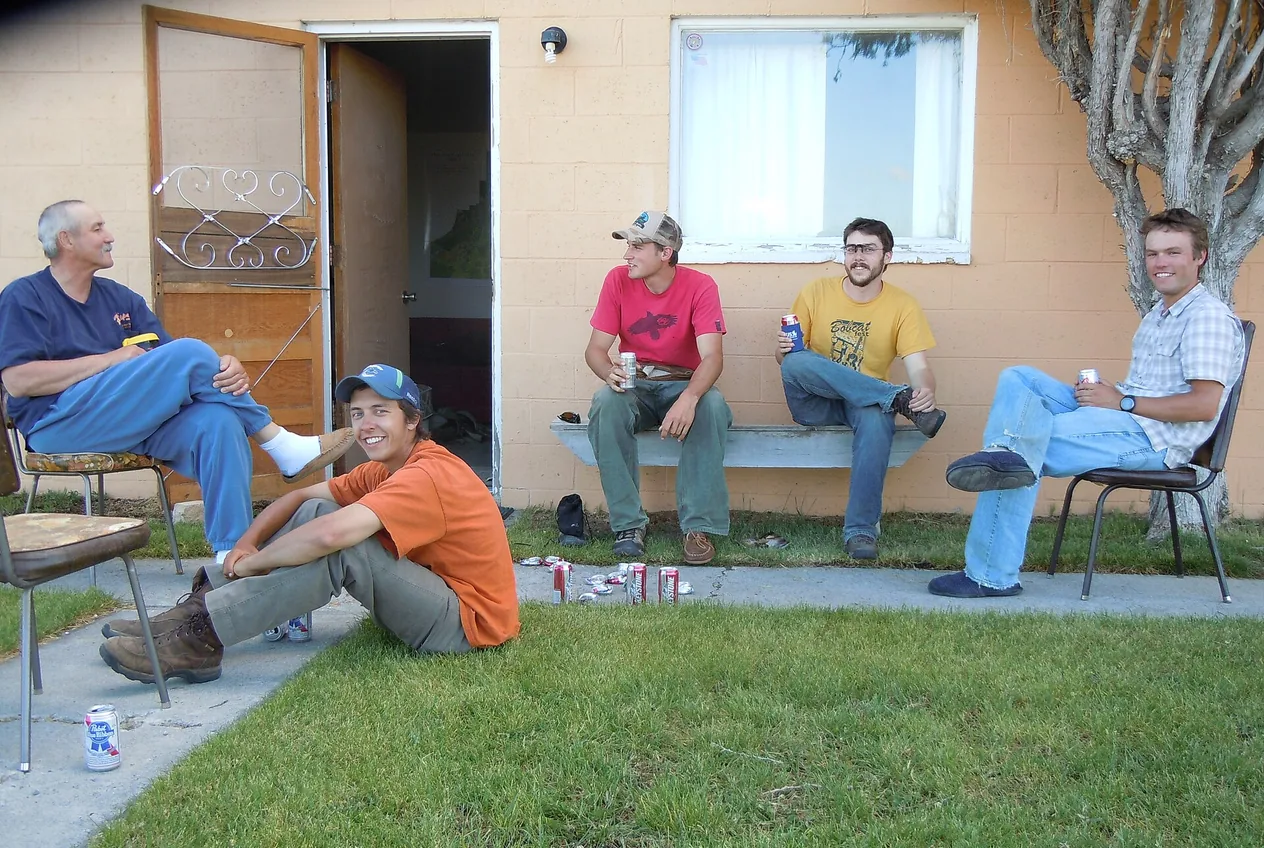
Atomic Days continues after the daytime programme and the rodeo, and this is where Club Sawtooth comes in. Depending on that year’s schedule, the weekend here may include live bands, late-night music, dancing, darts, pool, the AMI jukebox you run from your phone, karaoke when it is scheduled or available, festival-weekend drink specials and long community gatherings that carry on after the arena empties. The address is 156 W Grand Ave, on the same main street the parade uses, and the hours are daily from 2 p.m. to 2 a.m. Check the current event schedule for the weekend rather than assuming a band is playing, because the line-up is set annually.
Being on the parade street is a genuine advantage and it has one cost: on parade day you may not be able to drive to the door. Walk, or park early and out of the closure area and plan the evening on foot.
What the bar is not: it is not rodeo parking, it is not trailer storage, it is not overnight camping and it is not an event shuttle. None of those services are established for Atomic Days, and asking staff to make an exception at midnight does not create one. Overnight vehicle parking for a bar customer is a different and generally possible thing, with current staff direction. Everything else belongs to the county grounds, the campgrounds and the organisers.
And the sequence that keeps the whole thing safe: finish the parade, rodeo or park event; change out of wet clothing; move and secure vehicles, equipment and animals; park legally; choose the sober driver or arrange the ride; and only then continue the evening. The driver stays the driver. Phone (208) 527-3003 if you want to ask about a specific night.
Frequently asked questions
When is Atomic Days, and is the date fixed?
The weekend is traditionally held over the third full weekend in July, and the exact dates, times and events change every year. The pattern is stable; the schedule is not. Get the current year’s dates from the City of Arco and the Atomic Days organisers before you book travel, and check again in the week before you come.
What is the wet parade, and when does it get wet?
The Atomic Days parade begins as a normal procession and then turns into a town-wide water fight on a signal. Sirens and banners announce the change, fire crews start spraying water along the route, and spectators and participants join in. Before the signal the parade is dry; after it, anyone in the designated wet area should expect to be soaked. It is intentional and it is the signature moment of the weekend.
Can I watch the parade without getting soaked?
Ask the organisers which viewing areas are outside the wet zone, and treat that answer as the boundary rather than guessing. Standing further from a float is not protection, because water is applied along the route by crews rather than thrown from one place. If you want to stay dry, arrive knowing where you are standing and bring a towel anyway.
Where is the Atomic Days Rodeo and what time does it start?
The rodeo runs at the Butte County Rodeo Grounds, and Butte County maintains the facility and publishes its fair and rodeo materials. Recent programmes have paired a pre-show, the rodeo itself and a post-show across an evening, with performances on two nights, but the dates and start times are set for that year alone. Confirm the current schedule before travelling and arrive early enough to park without blocking livestock, contestant, ambulance or equipment access.
What should I bring, and what should I leave behind?
Bring clothing and footwear that can get wet, a full dry change in the vehicle, a towel, sun protection, drinking water, a waterproof phone pouch and a sealed bag for keys and cash, plus eye protection for small children if needed. Leave behind unprotected cameras, open handbags, paper that cannot get wet, glass containers and any expensive electronics without waterproof protection. Also bring dry warm layers for the rodeo in the evening, which is a separate outing from the water fight.
Are the bands, fireworks and park events the same every year?
No. Performers, the nonprofit partners, the tournaments, the fun run, the community lunch, the park schedule and whether fireworks are included are all announced annually and change from year to year. A previous year’s schedule is useful only for understanding how the days are arranged. Never plan around a line-up you read about from an earlier festival.
Where should I stay during Atomic Days, and how late can I book?
Book as early as you can. Arco’s RV parks, campgrounds and rooms fill for the weekend, and the free and low-cost public sites in and near town go first, followed by the campgrounds at and near Craters of the Moon. Good fallbacks in the region include Mackay, Carey, Ellsworth, Moore and Island Park. Search on Recreation.gov for the public sites and confirm current availability rather than a past trip’s memory.
What happens to driving and parking in Arco during the festival?
Expect parade street closures, published alternate routes, limited parking, heavy foot traffic, wet pavement, rodeo trailers and livestock movement. Butte County coordinates alternate routes around parade closures, so navigation apps can suggest roads that are temporarily shut. Park once and walk, fill the fuel tank before closures take effect, carry cash as well as a card and do not count on cell service in the crowds. Check Idaho 511 for the state highways.
Can I combine Atomic Days with Craters of the Moon and EBR-I?
Yes, and the usual shape is Friday for EBR-I and Arco’s atomic-history sites, Saturday for the festival and the rodeo, Sunday for Craters of the Moon, which sits about 18 miles southwest of Arco on US-20/26/93. Check current conditions and entrance information for the monument, and note that EBR-I is normally a seasonal museum, though mid-July usually falls inside its visitor period. Do not put a Mount Borah climb or a long off-road ride straight after a late festival night.
Does Club Sawtooth offer parking, trailer storage or a shuttle for the weekend?
No. The bar is not a shuttle service, not rodeo parking, not trailer storage and not overnight camping, and none of those services are established for Atomic Days. Overnight vehicle parking for a customer is sometimes possible with current staff direction. For anything else, use the county rodeo grounds, the town campgrounds and the organisers’ own arrangements, and settle the sober-driver plan before the evening starts.
Sources and updates
Check current access, hours and conditions before setting out.
- City of Arco Atomic Days information
- City of Arco official site
- Atomic City, Idaho, and the 1955 BORAX-III demonstration
- Nine notable facts about EBR-I, the first nuclear power plant
- Idaho 511 current road conditions and closures
- NPS Craters of the Moon current conditions
- NPS Craters of the Moon directions and entrance information
- NPS Craters of the Moon things to do
- Recreation.gov camping search for the Arco area
- Butte County Idaho, the county that runs the rodeo grounds